Redesigning understanding for first-time contributors in a Bitcoin DAO.
Someone who had spent years building DAOs told me, "Bitcoin doesn't really have contributor DAOs." But RootstockCollective already existed. The ecosystem wasn't missing. People just didn't understand it yet. So I explored RootstockCollective as a first-time contributor and redesigned and built its onboarding around one question: how can the first few minutes feel clearer, simpler and more welcoming? The redesign caught the attention of the RootstockCollective team, and they reached out to me.
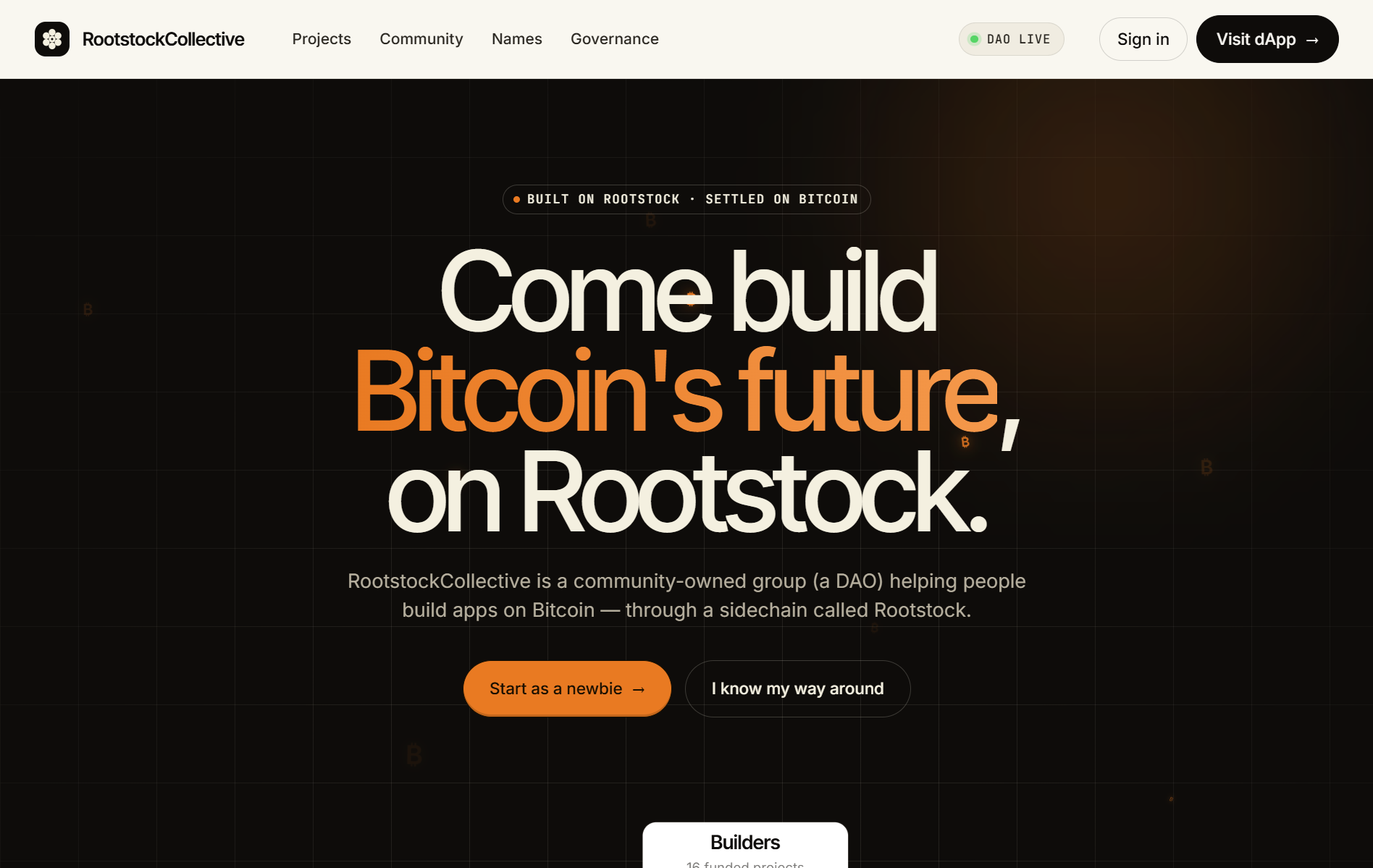
Not a critique. A first-timer's view of a strong ecosystem.
RootstockCollective is a contributor DAO in the Rootstock Bitcoin ecosystem. It already has strong infrastructure and thoughtful foundations: governance, grants, contributor incentives, builders and backers, staking and ecosystem participation.
This project isn't a critique of any of that. I focused on three things for people arriving for the first time: onboarding clarity, contributor understanding and identity ownership.
Maggie from SheFi introduced me and other SheFiers to RootstockCollective, and that's where this started.
Everything was there. Connecting it took too much studying.
New users meet a lot of concepts very quickly: Bitcoin, Rootstock, DAOs, governance, staking, rewards, builders, backers. The ecosystem makes sense once you've spent time studying it. Onboarding should cut down how much studying that takes.
Going through the existing experience, I kept asking myself:
- What is Rootstock, and how is it different from RootstockCollective?
- How do contributors participate?
- Where do non-technical contributors fit?
- What actually happens when I stake?
Those questions hit hardest for the people the ecosystem needs next: non-technical contributors, creatives, ecosystem supporters and people entering Bitcoin ecosystems for the first time.
How can the first few minutes feel clearer, simpler and more welcoming?
A contributor-first onboarding, built around where people fit.
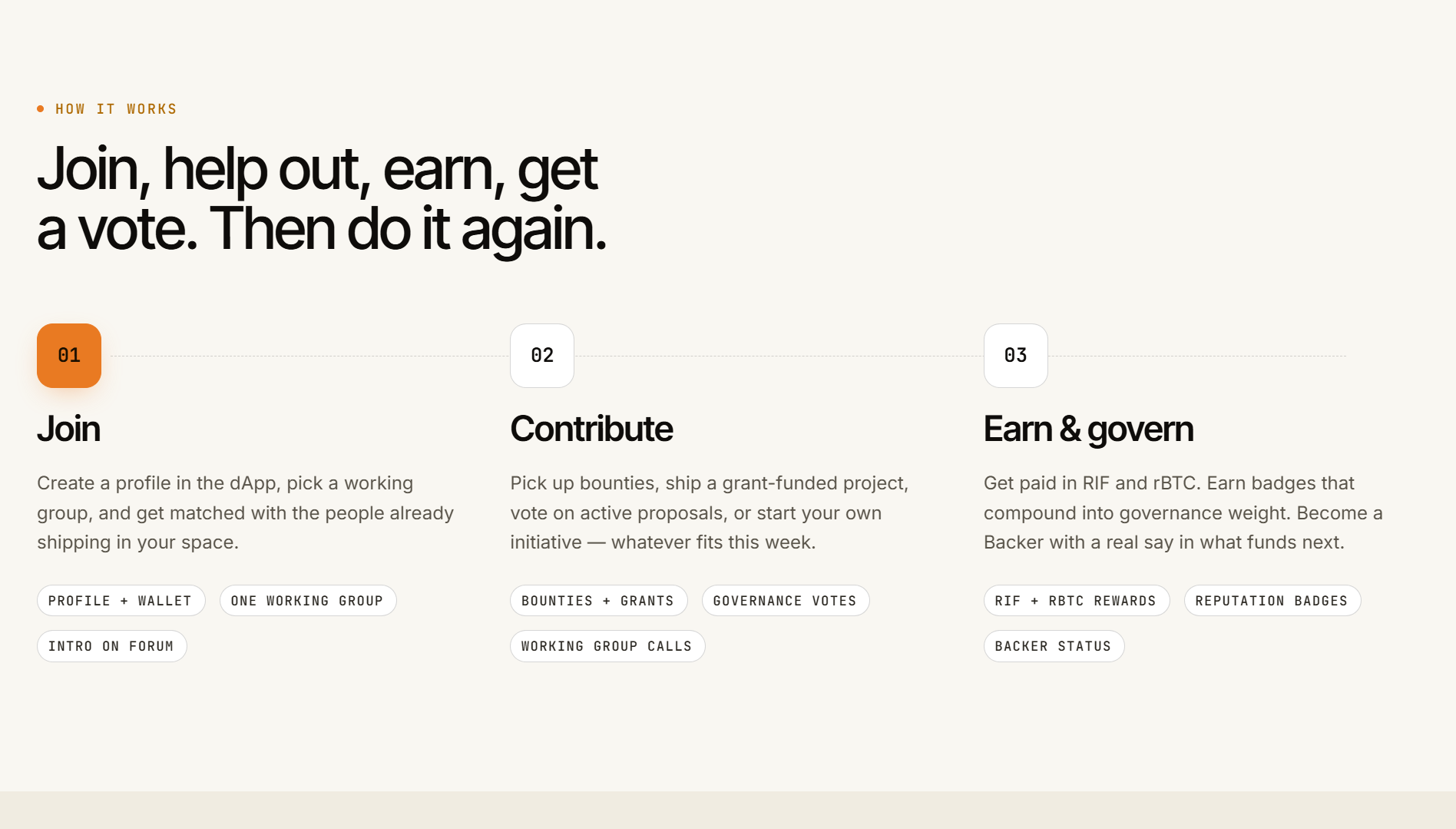
Instead of redesigning the whole ecosystem visually, I rebuilt the onboarding narrative so people immediately understand what the ecosystem is, why it exists and where they fit, without clicking through several pages first.
-
F.01
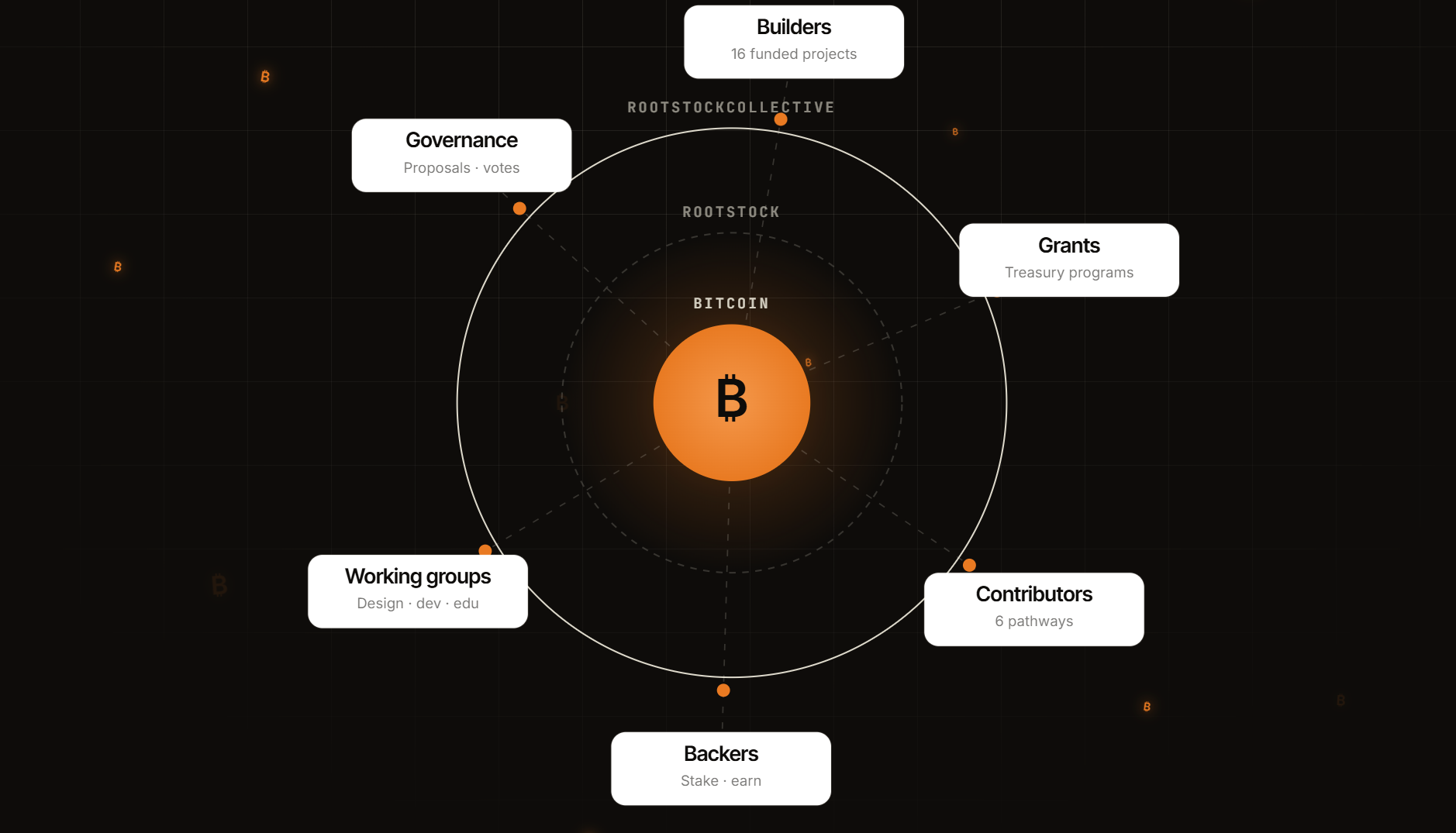
A simple ecosystem map in the hero.
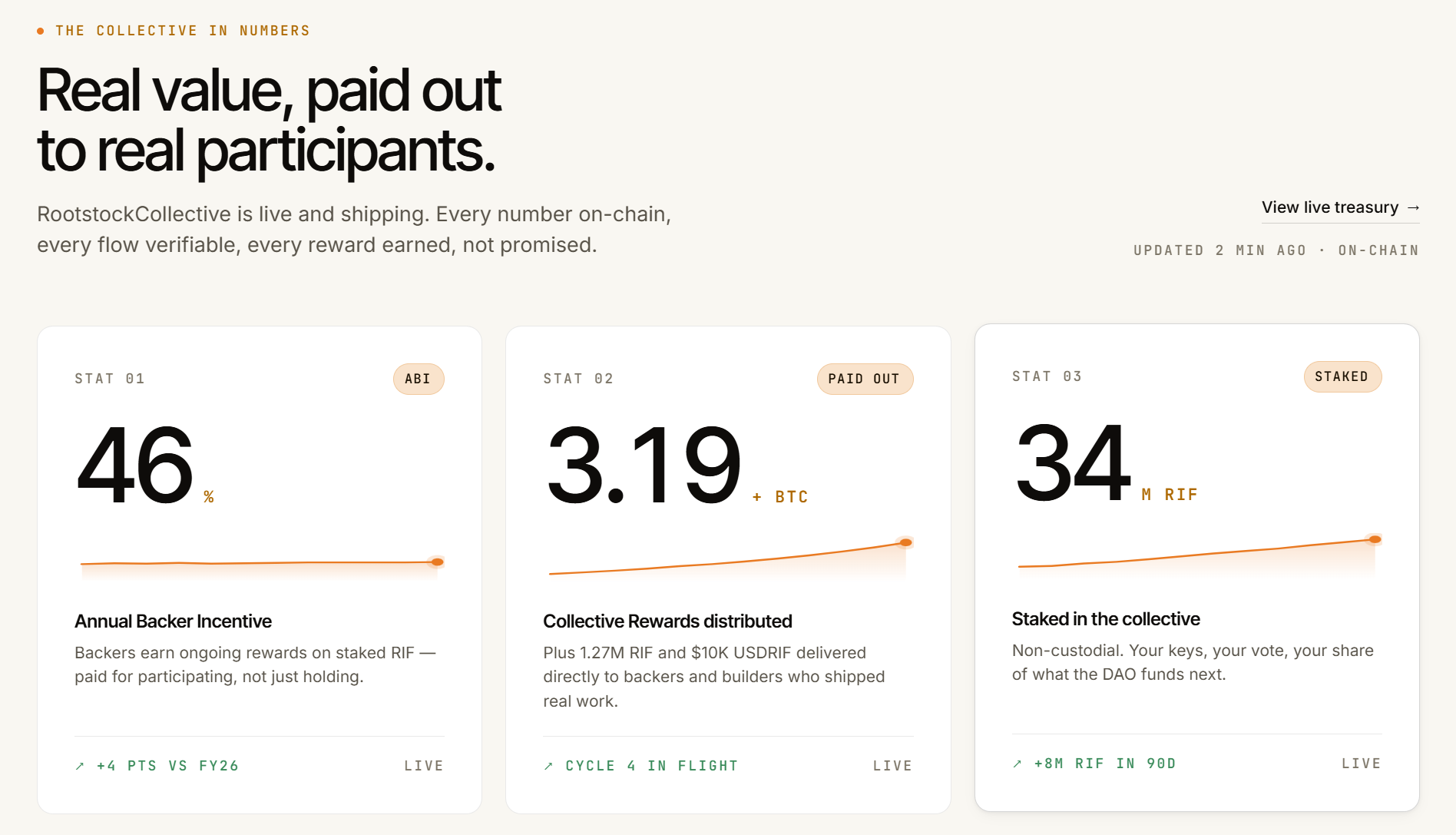
Three layers: Bitcoin as Layer 1, Rootstock as the Bitcoin sidechain, and RootstockCollective as the contributor layer, where most newcomers will land as backers or builders, technical or not. Ecosystem activity and participation metrics sit alongside it so the DAO feels active and transparent.
-
F.02
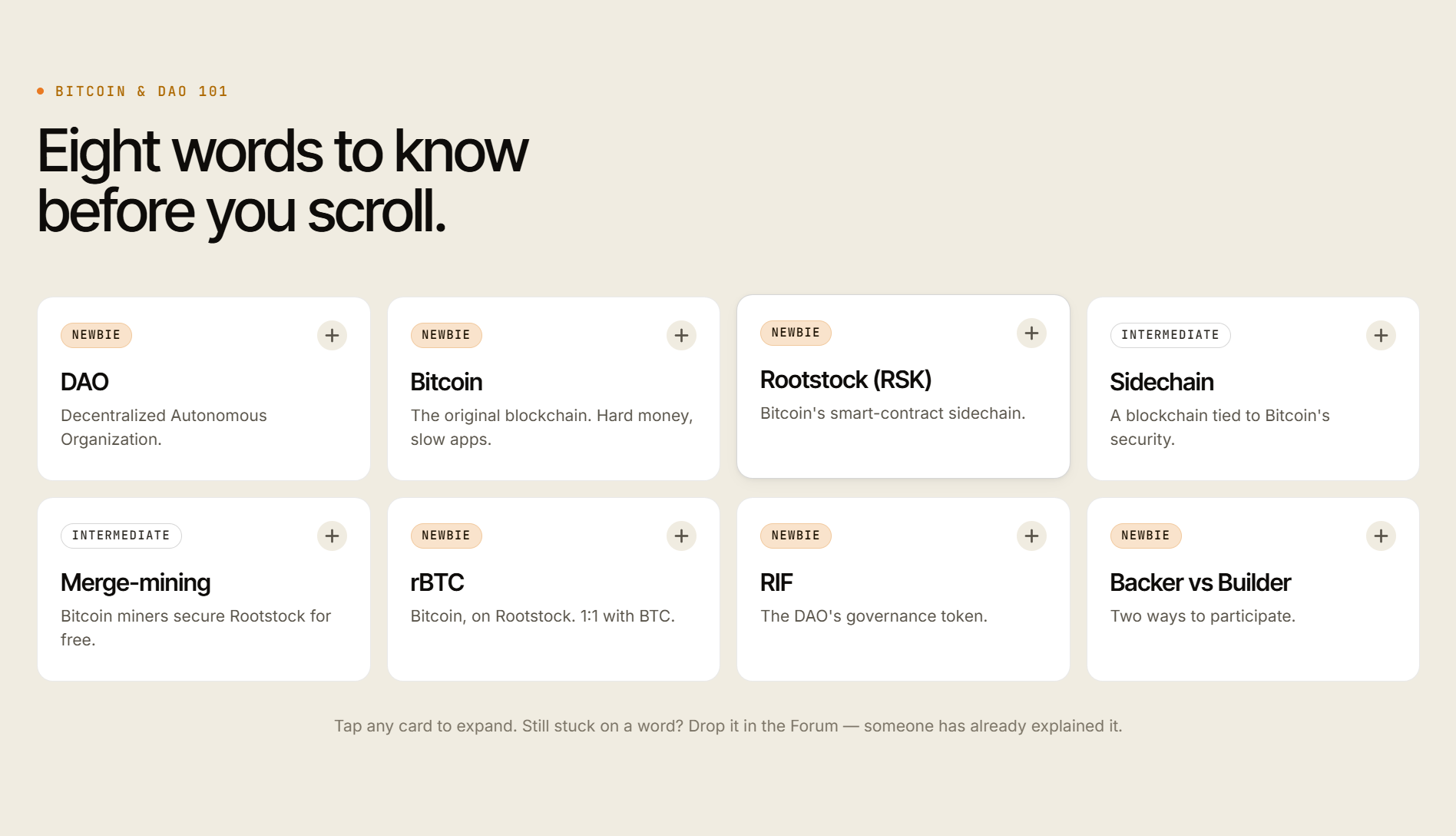
Glossary cards for the words that scare people off.
"Eight words to know before you scroll": DAO, Bitcoin, Rootstock, sidechain, merge-mining, rBTC, RIF, and backer vs builder. Each card is tagged newbie or intermediate and expands for more, so the ecosystem feels understandable before it feels technical.
-
F.03
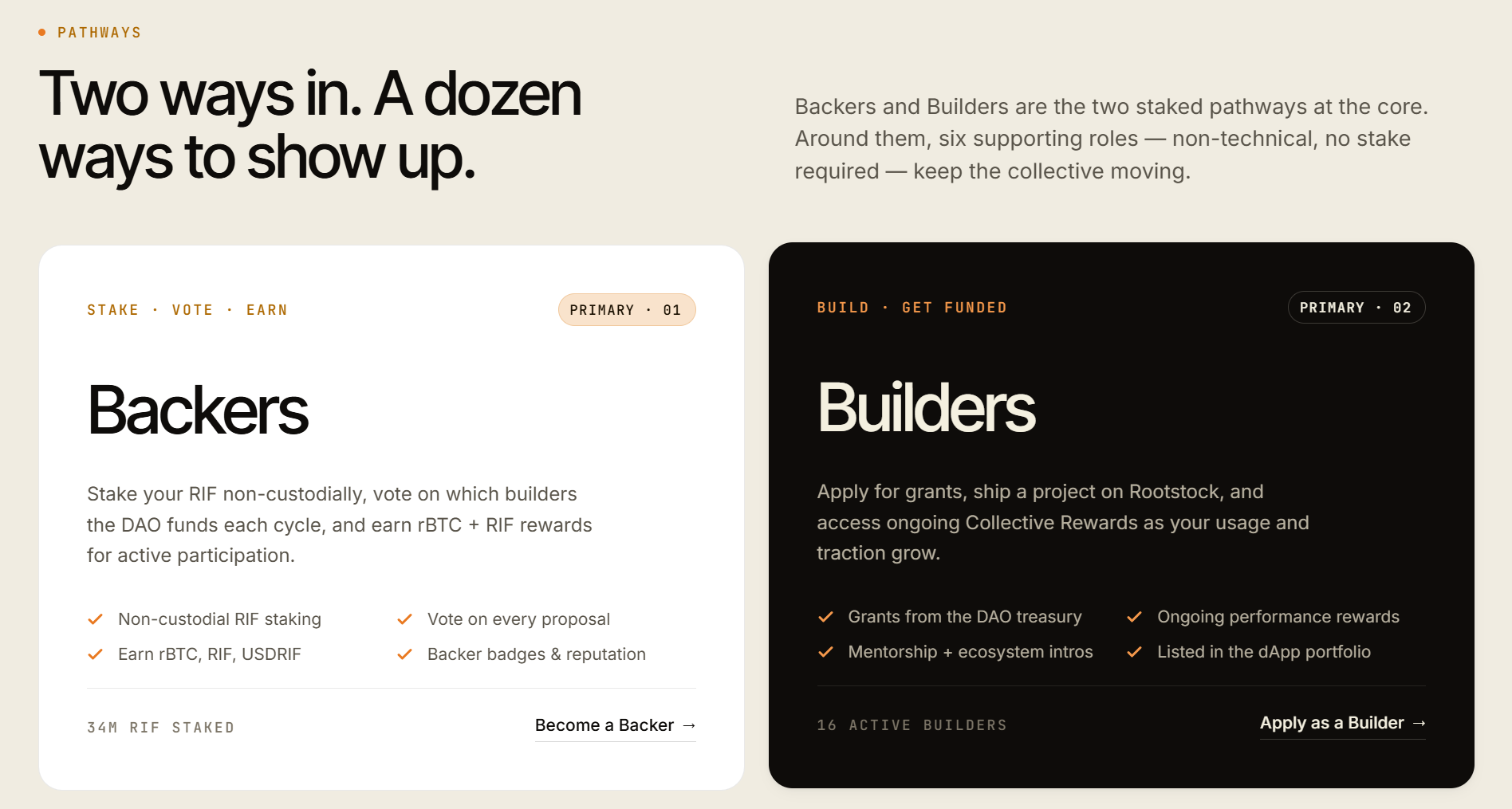
Contributor pathways beyond "builder" and "backer".
Many DAO platforms explain protocols better than they explain people. I added clear pathways for designers, developers, educators, writers and community contributors, so they recognise straight away that they belong too.
-
F.04
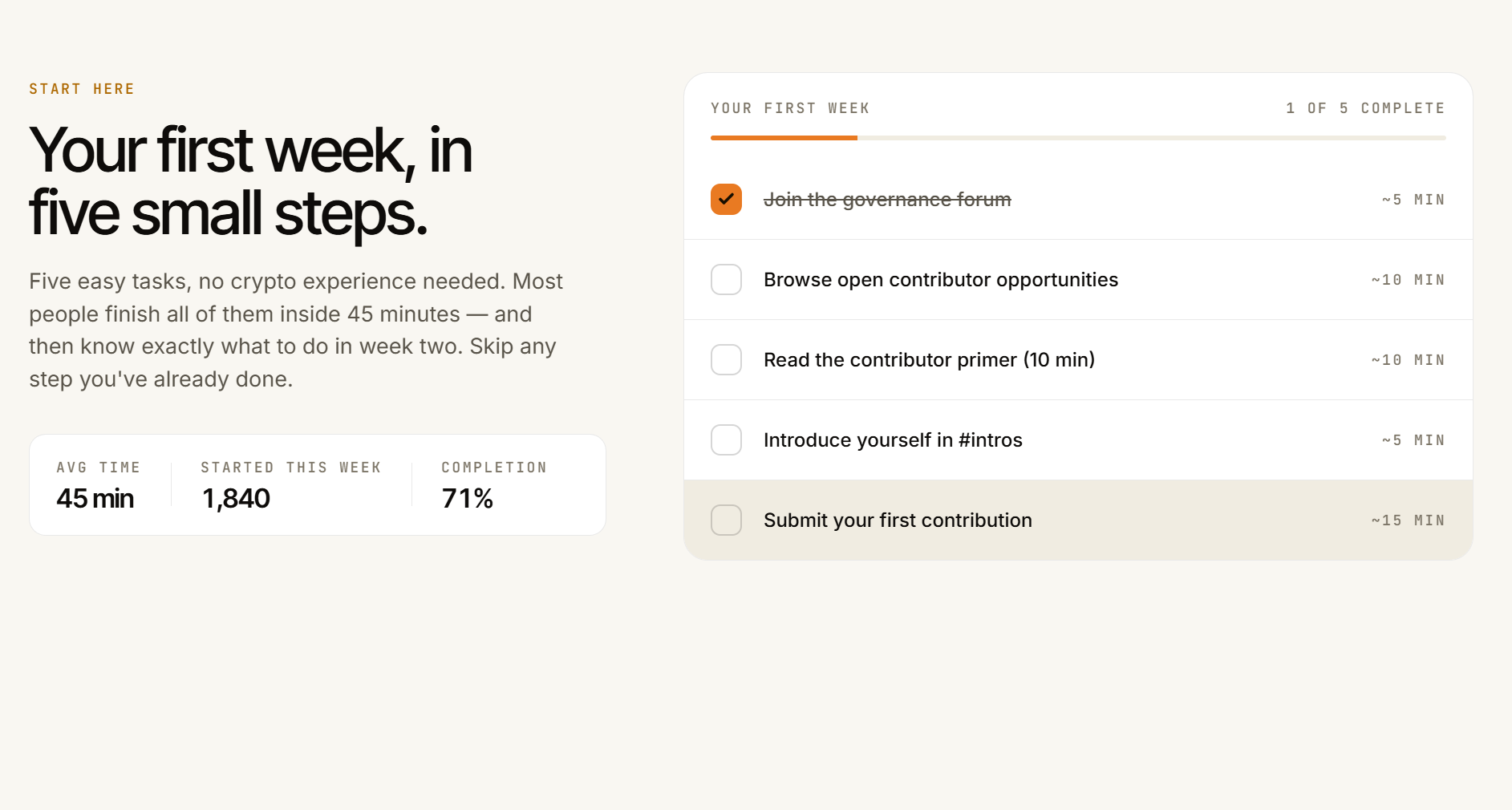
A "Start Here" flow: five steps, about 45 minutes.
Join the governance forum (~5 min), browse open contributor opportunities (~10 min), read the contributor primer (~10 min), introduce yourself in #intros, and submit a first contribution. Guided, not research-heavy.
-
F.05
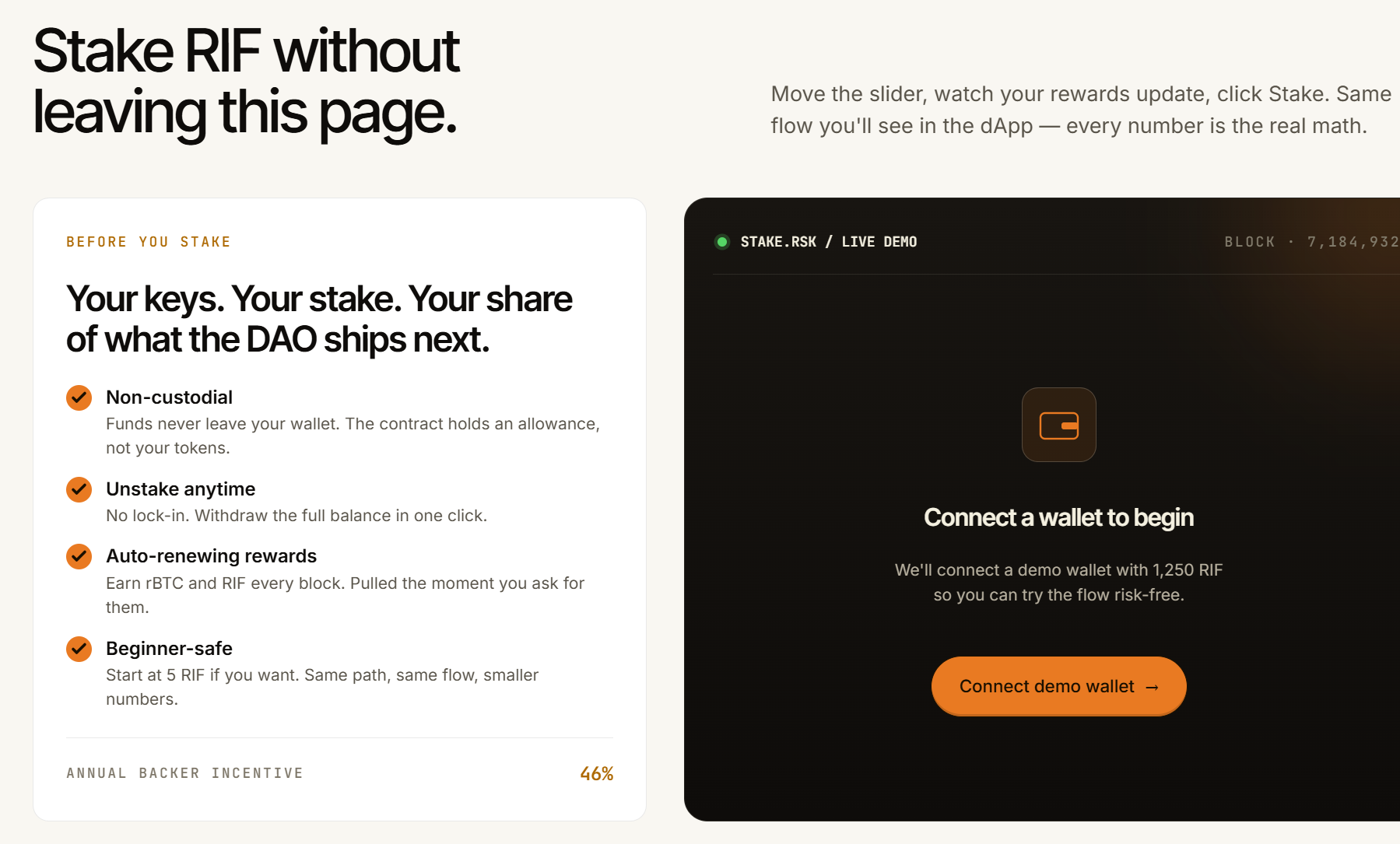
A staking demo with nothing at risk.
Connect a demo wallet, choose a percentage, drag the slider and press "Stake RIF". It confirms and starts counting rewards, so newcomers can see how staking works before they commit real funds.
-
F.06
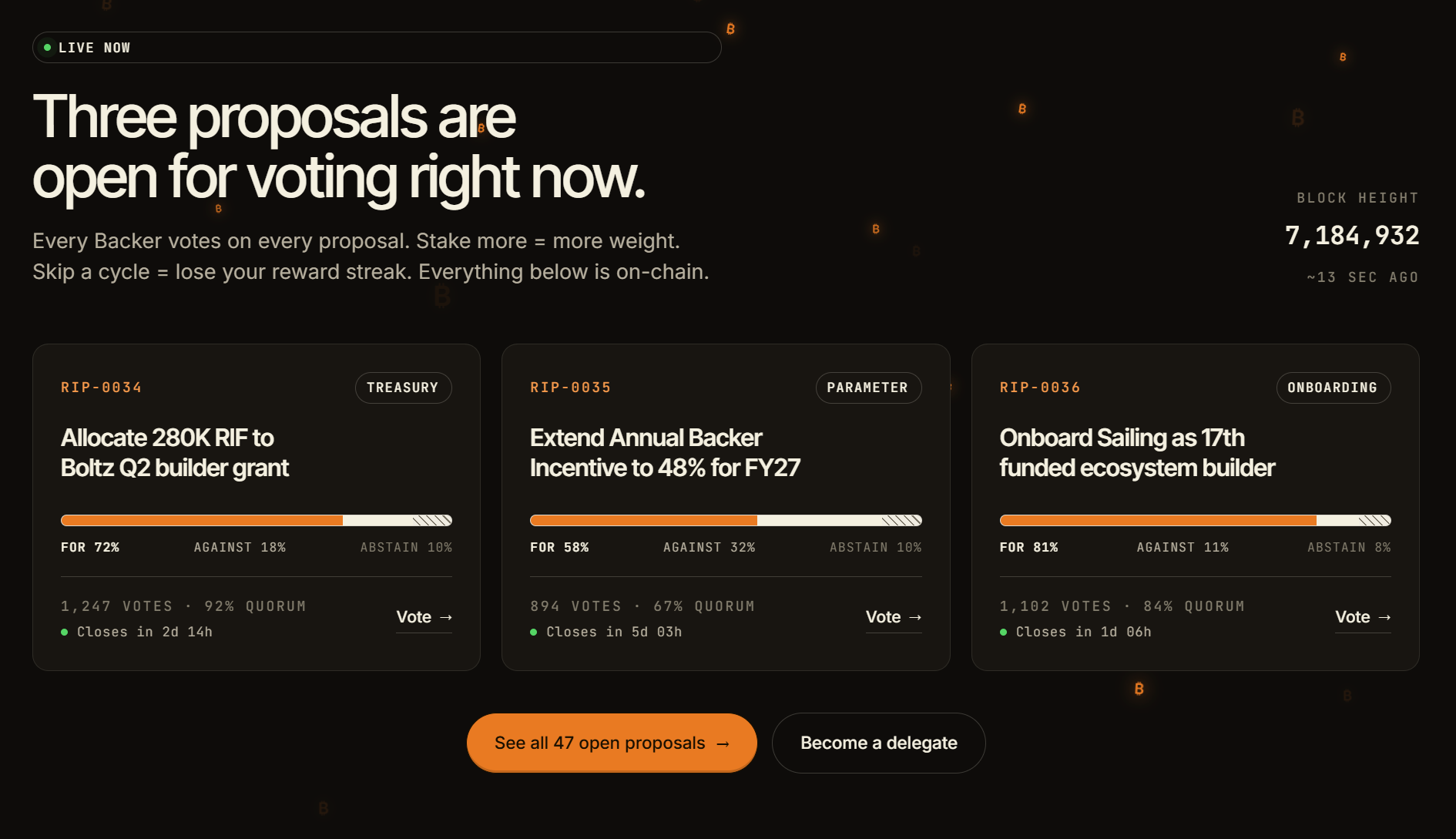
Live governance proposals, one click from voting.
Active proposals are surfaced inside the onboarding. Opening one, or viewing all of them, goes straight to RootstockCollective on Tally to vote, so governance feels close rather than distant.
What makes participation feel personal?
The further I went, the more I thought past onboarding. Contributor ecosystems aren't only governance mechanics. They're also about identity and belonging.
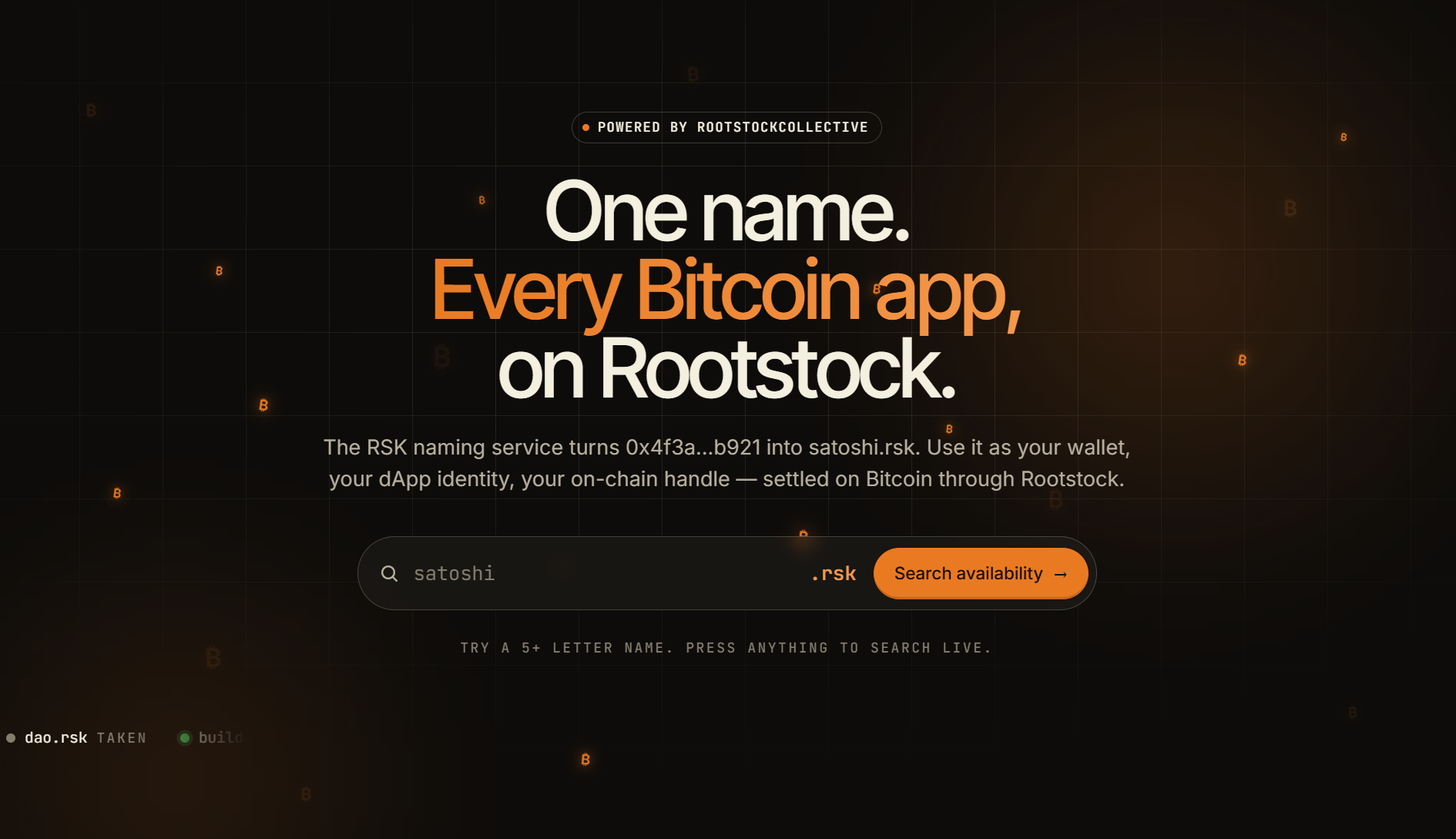
That led me to explore how ownership and digital identity could become part of onboarding through RSK domains: searching for and claiming a name in the ecosystem as part of joining it.
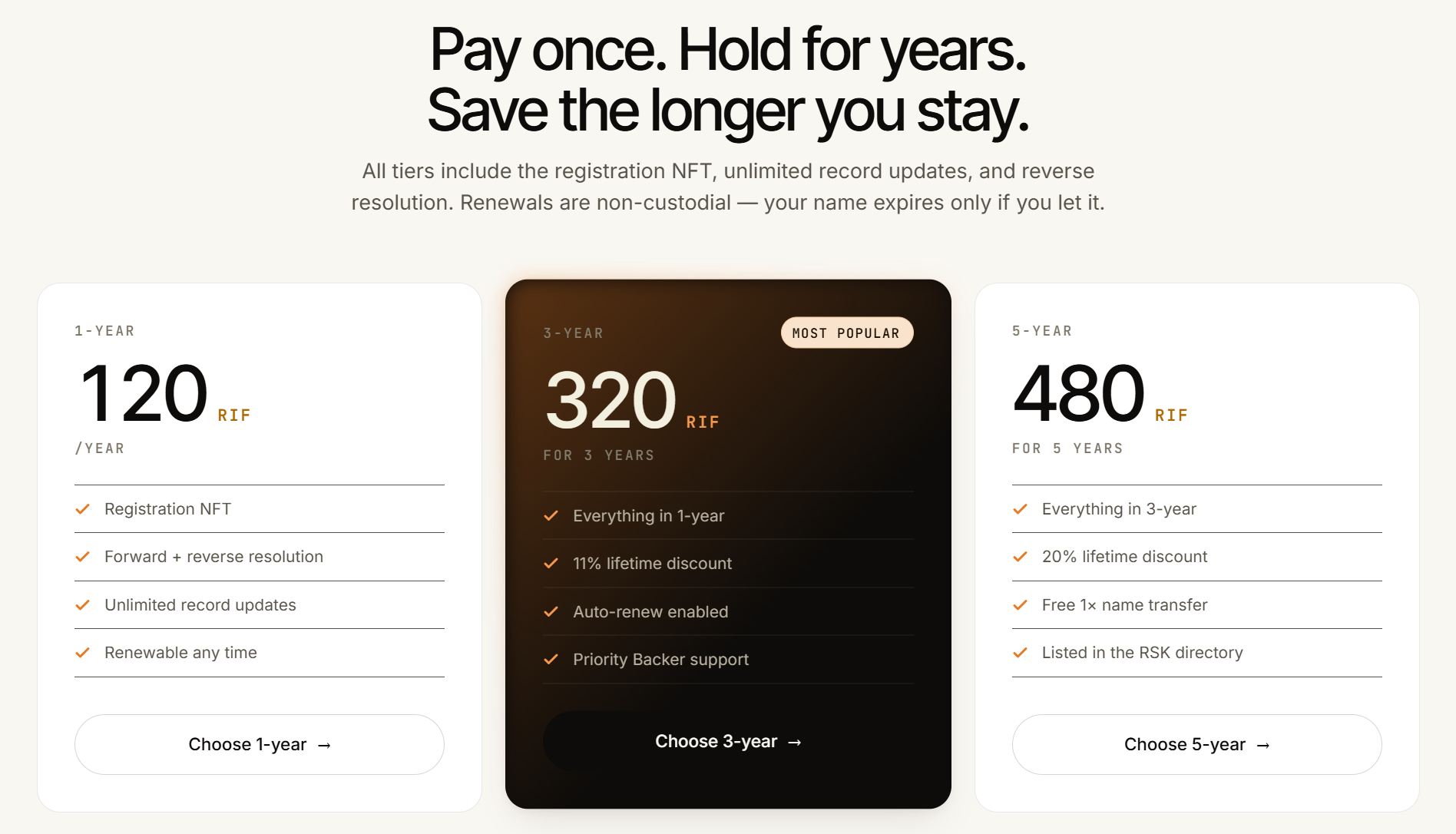
The Names page turns a wallet address like 0x4f3a…b921 into satoshi.rsk, a single handle for your wallet, dApp identity and on-chain profile. Pricing rewards staying: one, three or five years, paid once, with renewals that never take custody of your name.
It reached the team it was designed for.
- Designed and built a working onboarding concept: ecosystem map, glossary, pathways, Start Here flow, staking demo, live proposals and RSK identity.
- Caught the attention of the RootstockCollective team, who reached out to me after seeing the redesign.
- Posted it to the RootstockCollective community as a proposal for feedback.
- Published a walkthrough on YouTube and a thread on X as part of my UX Case Study Series.
Watch & read
Less about a website, more about understanding.
-
L.01
The problem wasn't visual quality.
The foundations were strong. The opportunity was clarity, discoverability and helping contributors understand where they fit.
-
L.02
Explain people, not only protocols.
Newcomers decide whether to stay based on whether they can see themselves in the ecosystem, not on how well the mechanics are documented.
-
L.03
Let people practise before it costs them.
A safe demo removes the fear and hesitation around staking that no amount of explanation does.
-
L.04
Bitcoin ecosystems have room to grow here.
Onboarding UX, contributor systems, governance accessibility and ecosystem storytelling all matter more as non-technical contributors arrive.